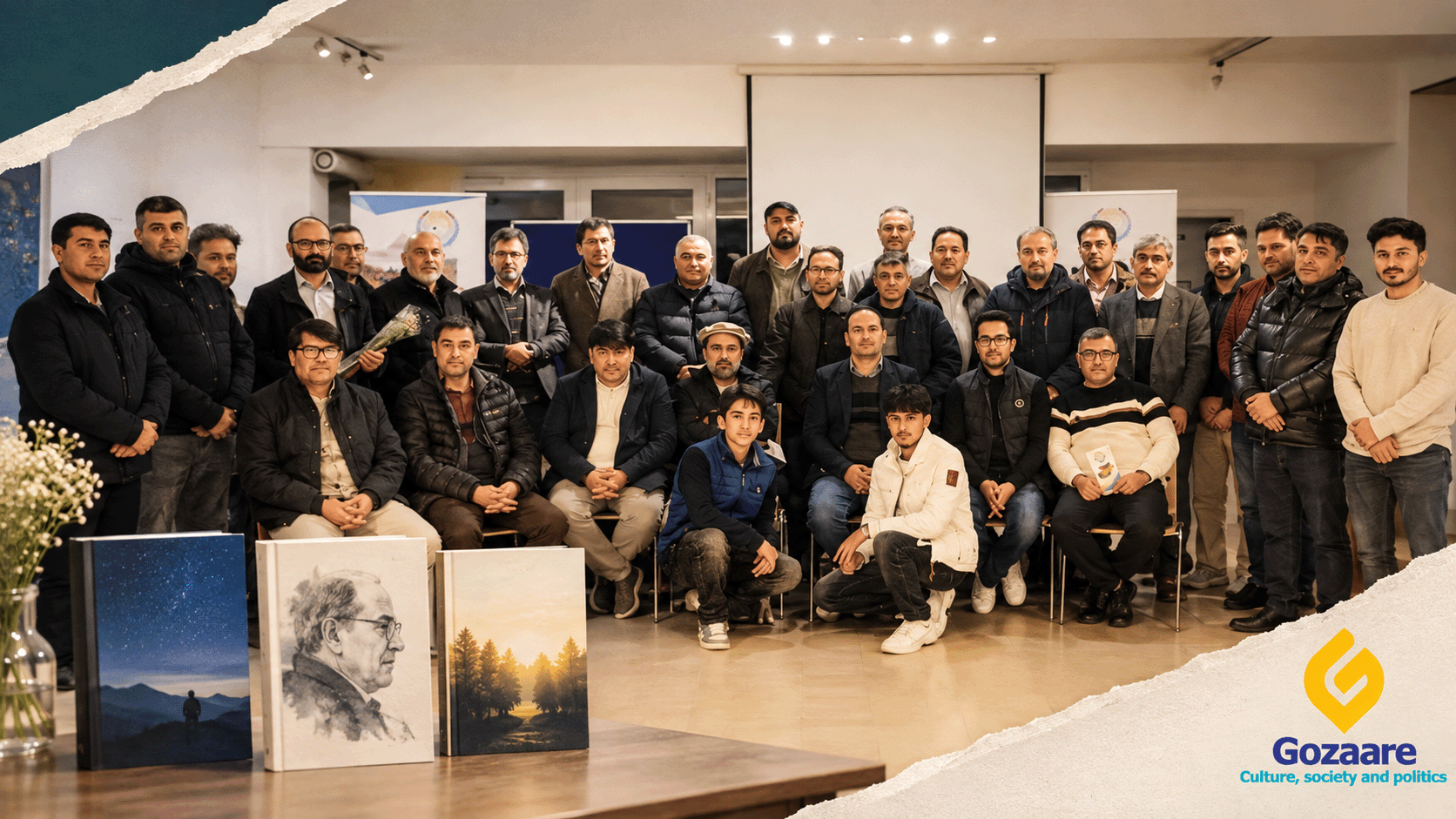
The Centre for Afghanistan Studies and Cooperation presented three new books by the Afghan poet, writer and translator Tayir Zhaland in Bonn on 13 November. Pashto- and Dari-speaking writers, poets and cultural figures attended. The gathering focused on the role of books and literary translation in strengthening literary ties between Afghanistan’s languages.
Three books, three literary traditions
Two of the new volumes are translations. The Rain of Stars contains Pashto translations of poems by the Dari-language poet Partaw Nadiri. Poems by Hermann Hesse presents Pashto translations of the German writer, poet and Nobel laureate. The third book, Here, Too, the Scent of Light Is in the Air, collects Zhaland’s own poems.
Both translated volumes include the poems in their original Dari or German. Readers can compare the originals with the Pashto versions. All three books were printed in Afghanistan.
The literary work of translation
The event opened with a recitation from the Quran, followed by Afghanistan’s national anthem. Basir Danishyar, deputy head of the centre, welcomed the guests.
Dr Khushal Rohi spoke about the role of literary translation in forming a shared culture and national identity. Translating works between Afghanistan’s languages, he said, could bring readers closer to one another and deepen mutual understanding. He also spoke about the value of reading and translating the literature of a country of refuge and commended Zhaland’s work.
In a video message, Nadiri thanked Zhaland for making The Rain of Stars available to Pashto readers. Professor Ghafoor Liwal discussed Zhaland’s poetry, translations and ideas, drawing on examples from the new volumes and examining the relationship between translation and writing poetry.
Writer and poet Anwar Wafa Samandar discussed love, metaphor and poetic imagery in Zhaland’s selections. Journalist Ibrahim Spichali also spoke about the translations. Poet Matiullah Raufi shared a message from the Kunar Cultural Association and read a poem written for Zhaland. Other guests contributed brief remarks.
Writing and translating in exile
Zhaland said he had wanted from the outset to create a common platform for literature in Afghanistan’s different languages. He said writers shared experiences of pain and suffering, yet sustained efforts to translate literary texts and poetry between Dari and Pashto for future readers had been lacking. That was the reason he took up the work.
He said readers should be able to discover poets and works in Afghanistan’s other languages. He hoped the translations would give future generations access to that literary inheritance.
Zhaland had read Hesse for years, but his interest deepened after he arrived in Germany. He was drawn to the poems’ message to people living through war and its aftermath. He wanted to carry their literary and intellectual qualities into Pashto for Afghan readers.
He wrote and translated the three books in exile over the past several years. Guests also discussed why literary ties between Afghanistan’s languages matter. Zhaland’s books are available through the online bookseller Lolo.
This article reflects the views of its contributors. Gozaare’s editorial position may differ.