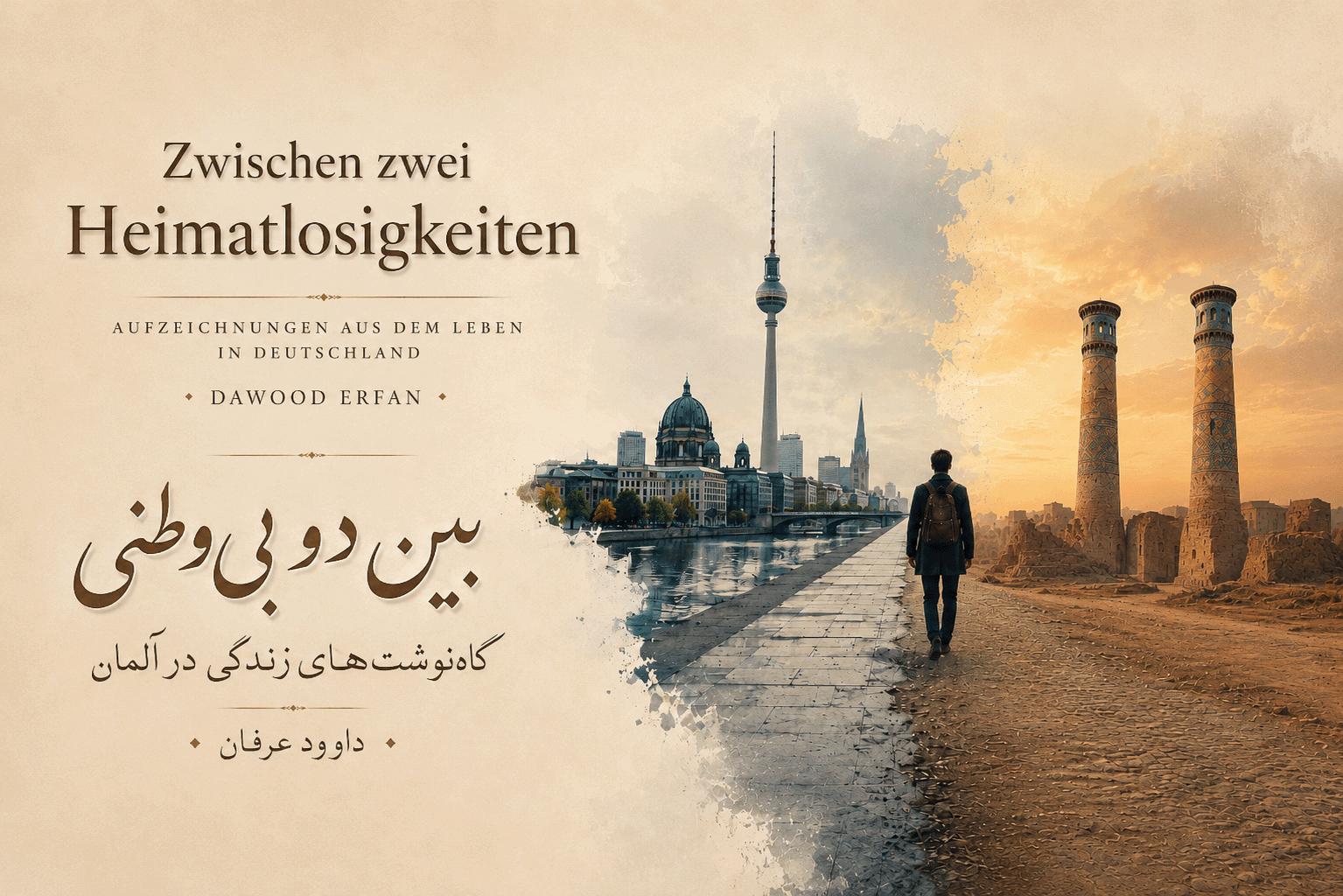
I had left my whole life behind
In Iran, I went through difficult days. I was out of work and constantly worried that my student visa would expire or go unrenewed. Eventually a door opened to Germany, and I was able to leave for that country.
When the Iran Air plane took off from Tehran for Hamburg, tears ran down my face. My son asked why I was crying when we were going somewhere safe. I told him I was leaving forty-three years of my life behind and going to an unfamiliar country to start all over again. Behind me lay a life of memories and years of tireless effort.
For the children, the journey was full of excitement. They marvelled at the landscape below, laughed and talked hopefully about the future. For me, it was the hardest journey of my life. Once again, I would be starting from nothing.
I was tired. For four decades I had repeatedly rebuilt my life from the ground up. I had just earned my doctorate and thought it was finally time to rest, look after myself a little, travel, write books and enjoy life. Fate had another story in mind, and that story had only just begun.
After five and a half hours, we landed in Hamburg. The airport workers happened to be on strike. Ours seemed to be the only plane that had landed. The police officers spoke to us kindly in English. After taking our details and fingerprints, they asked whether we needed a ride to the reception centre. We told them a friend was waiting outside. Their courtesy and respect made a deep impression on me.
Mohammad Ali Meraj and a relative were waiting outside the terminal. We could not connect to the airport Wi-Fi, but we happened to meet a woman from Afghanistan who let us use her mobile connection. We called Meraj and asked him how to find him.
The luggage trolleys needed coins, and we had none. Apart from us, there were just two people in the terminal, an older man and a young woman wearing a headscarf. She spoke excellent English. We offered her banknotes in exchange for coins. She had no suitable coins and asked the older man to help. He reluctantly took one out of his wallet, but when I said I needed several, he frowned and took the coin back from my hand. I was speechless.
The young woman was angry. She took his wallet, pulled out some coins and handed them to me, refusing my offer of payment. We thanked her and went to the trolleys. Only then did I notice that the coins came from Azerbaijan.
Meraj and his companion took us in two cars to the reception centre in Berne. We stayed there for three days. Our friends in Hamburg helped us however they could. Even after decades of war, poverty and displacement, people from Afghanistan find ways to look after one another.
The next day Meraj brought me a temporary SIM card. My fellow journalist Wahid Peyman took me to a shop and bought crisps, snacks, juice and other small things for the children.
One gesture still moves me. Sebghatullah Habibi was living in another reception centre and had just twenty euros. He gave me all twenty. I kept telling him he needed the money more than I did, but he insisted. I eventually accepted so as not to hurt him. Those twenty euros are priceless to me. They were a gift from someone who, while displaced himself, gave me everything he had.
My fellow journalist Hassan Hosseini also wanted to help. We never got to meet. I had to move on to Saxony.